
Introduction
This study offers a fresh look at cosmic “age” through a positive‑feedback, refinement‑based universe. It is not rigorous; it is a narrative adaptation of one section from a formal scientific manuscript we are preparing for publication.
A Positive‑Feedback, Refinement‑Based Universe
Imagine starting with a tiny, irregular seed — something like {1,2,0}. It isn’t smooth or uniform. If one visualizes its pieces arranged in order, the pattern looks jagged and uneven (Fig. 1). But each piece knows who its neighbors are. That simple “who touches who” relationship gives the seed a basic kind of structure.
Now picture a very patient worker ant walking along this seed. The ant has one job: whenever it sees a piece, it replaces it according to a simple rule:
0 → {1,2,0}
1 → {1,1,2}
2 → {2,0}
This is a branching rule, not a spatial embedding. It describes how much local structure is generated at each refinement step, not how many spatial dimensions the universe has. The number of symbols in the replacement set is not a spatial dimension — it’s a local expansion factor. Because this rule describes local branching rather than spatial extension, the refinement plot shown later in the text is not a picture of space. It is a causal‑refinement history: horizontal position tracks refinement depth, vertical position tracks accumulated proper-time ticks, and color tracks causal status.
Every time the ant applies the rule, the seed becomes more detailed. A single piece turns into several pieces, and those pieces turn into even more pieces. The seed begins to blossom into a long, intricate chain of sub‑pieces. That’s refinement. But something much deeper is happening.
When the ant sees a 1, it replaces it with {1,1,2}. One 1 becomes two new 1s. Those two 1s will each become two more 1s the next time the ant passes over them. Two become four. Four become eight. Eight become sixteen. This is positive feedback: a small local feature generating more of itself, which generates even more of itself, accelerating the whole process. In ordinary language, the change in the thing at any moment is proportional to the amount of the thing present at that moment — that’s the hallmark of exponential growth.
But here’s the key — it’s not just growth, it’s a push. Each refinement step makes the seed more crowded in that region (Fig. 1). That crowding pushes outward on neighboring regions, causing them to refine earlier than they otherwise would. Their refinement then pushes outward again. The seed is expanding exponentially — it’s exponential expansive refinement. The whole seed becomes a self‑propagating cascade of unfolding. It’s more than numbers growing, it’s a wave — a wave of unfolding — sweeping through the seed, triggered by a tiny irregularity and amplified by the rule. When we speak of the seed “expanding” here we mean refinement‑driven structural growth (combinatorial unfolding), not metric expansion (geometric stretching). These are entirely distinct processes. Metric expansion belongs to a geometric worldview; refinement‑driven unfolding belongs to a generative one.
When one steps back from the ant and the seed, the picture begins to reflect something ancient and sacred. A small, irregular beginning is met by a simple, faithful rule, and out of that pairing a whole structure unfolds. Nothing arrives fully formed. Instead, order emerges step by step, each refinement building on the last. It’s the same quiet rhythm we hear in the opening lines of Genesis 1: not a rush of instant complexity, but a sequence of acts that bring shape, separation, and fullness to what began as something irregular and unformed.
In a refinement‑based universe, that same pattern appears in miniature — a humble seed becoming an intricate world through countless small, steady acts of amplification. It’s creation by unfolding, not by spectacle.
Our more rigorous proposal doesn’t begin with smooth space and time at all, but with a chaotic, pre‑geometric substrate that refines into the orderly world we know. In this picture, time is not a line the universe moves through. Time is refinement depth — the number of refinement steps accumulated along a given continuity path. And once one sees time this way, redshift takes on an entirely new meaning.
Redshift as Refinement Depth Difference
In a refinement‑based universe, redshift is not caused by space stretching or by a photon aging during travel. It is a relational quantity: a comparison between the refinement level of the emitter and that of the observer. A photon emitted early in the universe’s refinement history originates in a region that is less refined — shallower in refinement depth. By the time we observe that photon today, our local region has undergone many more refinement steps; our substrate is deeper, more subdivided, more structured. The physical area covered by a region does not change — what changes is the grain of its structure[1]. Early refinement produces a few large, coarse patches across that area, while later refinement breaks the same area into many smaller, finer patches. Because those first few steps are explosively rapid, even a region with only two refinement steps can span a wide stretch of space, whereas a region with eight steps covers the same area but is divided into far more, much smaller patches. That’s the analogy: the photon links a coarse‑patched emitter to a fine‑patched observer. Redshift reflects that difference because the universe’s substrate is not the same now as it was then[2].
So, when we reconstruct that photon, it appears stretched. Not because the photon changed. Not because space expanded. Not because billions of years passed. But because we are observing it from a deeper refinement state than the one that produced it[3].
Imagine an old pair of suspenders with little stitch‑marks along the elastic. At emission, the region that produced the photon might have only gone through two refinement steps, so its “elastic” had two marks between the clips. When that same parcel of light is interpreted on our deeper, more subdivided substrate, our region has gone through, say, eight refinement steps, so our “elastic” has eight marks between the clips. The same underlying pattern is still there, but when it’s read on our finer elastic, it naturally spans four times as many marks. Nothing happened to the pattern — nothing happened to the photon in flight. The stretch comes from reading a coarse pattern — one produced on a much less refined substrate — on a much finer elastic, like clipping the same suspender to buttons that are farther apart on a newer, better‑fitted pair of pants.
Redshift, then, is simply the difference in refinement depth between emission and observation. It is a structural comparison, not a temporal one. We have prepared a low‑iteration refinement plot to make this explicit[4]. It shows how spacetime emerges in a refinement‑based universe from a {1,2,0} irregular seed given the subdivision rule shown above. The plot uses the vertical axis for local proper time and the horizontal axis for refinement depth (Fig. 2).
In the plot each horizontal row is one global update tick — a single time slice (counting as proper‑time for frozen, not active, locations), and the full stack of rows shows how long that spatial position remained active before freezing. This vertical height reflects local activity duration, not refinement depth; refinement depth is encoded horizontally, not vertically, where it increases monotonically and thereby orders global update time. The diagram is therefore not a snapshot but a compressed history — much like a tree‑ring cross‑section — and looking down a column traces the local proper‑time history of a single spatial location across successive global updates.
Horizontally, the rightmost region is the most deeply refined “now.” This is what we refer to as the vacuum, or ground state — the universe’s most refined and persistent structure. The left side shows progressively shallower, earlier refinement states (Fig. 2). Refinement depth therefore orders global update time from left to right, but the freezing order runs from right to left, since the rightmost columns completed their refinement earliest. This is why the freezing direction across refinement depth runs from right to left: the rightmost columns froze first and therefore correspond to the deepest, longest‑persisting refinement states, while the active frontier advances leftward into regions that have not yet completed their refinement. Red marks the active frontier where new structure is being generated (Fig. 2). This frontier is also the key to understanding why the night sky is dark — the structural heart of Olbers’ paradox[5]. Columns that are not red have become stiff or frozen; these behave as timelike structures for massive modes, since they have exhausted their local updating capacity and persist through many refinement steps without internal change, accumulating proper‑time as they do so. Transitions between adjacent columns correspond to null propagation: these adjacency hops carry no interior proper‑time and represent photon‑like modes.
Although the frozen/persistent vacuum region on the right appears visually shallower than the mix of active and recently frozen structure on the left (Fig. 2), this does not mean it is less refined. In this plot, earlier proper-time ticks appear higher and later ones lower; vertical position records local proper time, while refinement activity propagates across refinement depth from right to left. The rightmost columns freeze first because they have already reached their deepest refinement state; this is where the initial seed and its earliest children lie, having completed their refinement first and therefore freezing before the rest of the locations in the refinement plot (right is therefore late, global update time, i.e., recent/now). Once frozen, they no longer accumulate visible time steps, which is why the vacuum appears short. By contrast, the left side contains both active red sites and recently frozen sites that persisted in refinement much longer; both populations are therefore tall, with slight height variations reflecting the exact moment each site exhausted its refinement capacity (Fig. 2). The greater vertical height on the left reflects longer activity duration, not greater refinement depth. The vacuum on the right remains the most deeply refined “now.”
So, in this picture, redshift arises from the difference in accumulated refinement depth between emission and observation: a signal emitted from a shallower refinement state (left, early global time) is reconstructed by a deeper observer (right/vacuum, late global time) as stretched, producing the observed redshift. This structural interpretation also aligns with JWST’s observations: the telescope routinely detects extremely high‑redshift objects whose internal maturity reflects shallow, rapid local refinement, not great temporal distance.
Curvature appears when the red frontier bends around interior stiff regions—timelike massive modes accruing proper-time along the vertical axis (Fig. 2)—shaping the large‑scale structure that emerges from this unfolding refinement history[6]. So,in this model, curvature is refinement delay, not metric distortion. In contrast to general relativity, where even static mass–energy contributes to curvature, the frozen vacuum on the right does not generate new curvature here; curvature is produced only while the frontier is actively bending during refinement, which in this plot occurs only on the left (Fig. 2). This is a genuine novelty of the refinement model: once a region freezes, it can record curvature but cannot produce new curvature, because the active frontier is long gone. This is why the deepest vacuum on the right is flat—frozen flatness (Fig.2). No frontier >> no bending >> no new curvature. This is a refinement law, and a physics hypothesis about the universe. Moreover, curvature generation is discrete in the sense that it is gated, it occurs only when the frontier is active, but the curvature itself is not binary; it is a continuous measure of how sharply the frontier bends around stiff sites.
The upshot is this:
Redshift isn’t “because space expands.”
Curvature isn’t “because mass tells space how to curve.”
Structure isn’t “because initial conditions plus inflation…”
All of these arise from a single underlying process: refinement depth accumulating differently in different regions of emergent spacetime. It’s not that the points above are necessarily wrong; it’s just that they’re handy descriptions — the polished surface of physics — not the machinery underneath it[7].
Why This Matters
This reinterpretation dissolves a long‑standing confusion: the idea that redshift measures the universe’s biological or historical age. It doesn’t. It never did. It measures structural depth, not biological duration. A high redshift doesn’t mean “this galaxy is billions of years older than Adam.” It means “this galaxy emitted its light from a shallower refinement state than ours.” The universe may look old in reconstructed time, but that appearance comes from how refinement accumulates — not from biological history. This is a category shift, not a workaround.
This same category shift also changes how we think about the “days” of Genesis. The biblical text describes creation as a sequence of ordered acts — separations, distinctions, emergences — not as durations measured by a universal clock. Modern readers often interpret those acts through the lens of a ruler each path uses to measure its own unfolding (called metric time), assuming time has always flowed the way it flows now. But in a refinement‑based universe, early creation unfolds through rapid, even intensely rapid structural refinements, rather than through metric hours. The ordering in Genesis mirrors this logic: not a timeline measured by a clock, but a sequence of formative acts that bring structure out of the unformed.
What This Does Not Mean About Biblical Time
Many Christians worry that an “old‑looking universe” conflicts with the Bible’s story of Sin, Death, and Salvation. But in a refinement‑based universe, redshift does not measure biological time. It doesn’t tell us when animals lived, when humans appeared, or when Death entered the world. It only measures the difference in refinement depth between the place a signal was emitted and the place it was received. That means:
- Redshift is not a clock for biological history
- It does not imply Death or Decay before Adam
- It does not conflict with the biblical outline of Sin and Salvation
The Bible speaks about the moral and spiritual state and history of humanity. Redshift speaks about the structural refinement of the universe. These are different categories — and they flat out don’t compete.
A Universe That Remembers Its Refinements
In this picture, the universe doesn’t carry a single, universal clock. It carries a record of refinement. Each region accumulates its own refinement depth, and the difference between those depths is what we interpret as cosmic “age.” The universe remembers its refinements — and that memory is what we call the “past.” The furthest extent of refinement is what we call “now.” Redshift is simply the imprint of that difference.
A Closing Reflection
If the universe began as something wild and tangled — “formless and void” in the deepest sense — then refinement is the story of Jehovah God, Creator, bringing order out of chaos. In that view, redshift becomes a sign of that unfolding order, a structural reflection of Creation’s journey from simplicity toward coherence. Seen this way, the cosmos looks profoundly purposeful.
Author’s Note
This study is a much‑condensed version of a section in a more technical scientific manuscript we’ve been developing, tentatively titled Unified Synthesis of the Feedback‑Driven Universe: Nothing [hyper-refinement] from Something [e.g., Fig. 1]. That manuscript explores a refinement‑based universe — a framework that begins before physics as we know it and builds toward the world we observe today[8]. The version you’ve just read is intentionally gentle and non‑technical. Its purpose is to introduce the core intuition behind the model — how refinement depth, frontier dynamics, and freezing behavior can give rise to familiar phenomena such as redshift and curvature — without requiring any background in physics or mathematics – or at least as little as possible.
Scripture Tie‑In: Order from Chaos
The Bible opens with a striking image: “The earth was formless and void, and darkness was over the face of the deep.” (Genesis 1:2). This ancient phrase doesn’t describe physics, but it does describe a beginning with quite minimal structure — a world awaiting God’s ordering hand.
In a refinement‑based universe, the earliest stages of creation are also minimally structured, wild, and tangled — not empty, but waiting to be shaped. As refinement unfolds, order emerges from chaos. Structure grows from simplicity. Coherence rises from confusion. And redshift — a local, substrate‑centered difference in accumulated refinement steps — becomes a sign of that unfolding order, a reminder that the created order has been on a long journey from the unformed toward the formed, under divine supervision[9]
This is not a scientific claim about Genesis or a theological claim about physics. It’s simply a resonance: both stories describe a world moving from disorder toward purpose. And for those of us who see Creation as the work of an all-wise and intentional God, the God of the Christian Bible and non other to be precisely clear, that resonance is ever so worth engaging and savoring.
Praised be your awesome Name great Creator God, even Jesus, my blessed Lord. Amen.
Illustrations and Tables
Figure 1. The Irregular {1,2,0} seed. Not Embedded in Space as Shown Here.
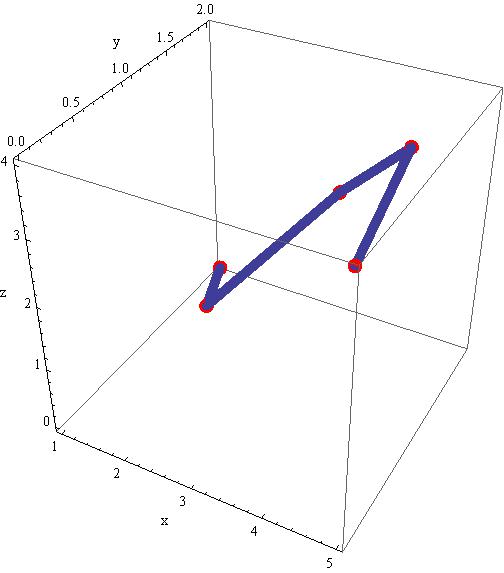
Figure 2. Emergent Spacetime (see legend below).

This image may appear compressed due to theme constraints. For full clarity, open in a new tab and zoom.
- Red — active refinement frontier (updating, it is detected by looking at the entire refinement history)
- Yellow / Orange — active interior states (updating but not frontier, ditto)
- Blue / Pink / White — frozen, maximally refined regions (no further updates, ditto)
- Black — padding / background (non‑physical, utilized to make the refinement history rectangular for detection of the above)
Horizontal direction:
- Increasing refinement depth (left = shallow, right = deep)
- Refinement depth orders global update time (left = early/ancient, right = late/recent)
Vertical direction:
- Accumulated update ticks at each spatial location (local proper-time history until freezing)
Redshift mechanism:
- A signal emitted with fewer vertical ticks is reconstructed by a deeper observer with more vertical ticks (vertical elongation). The stretch is vertical, but the cause is horizontal: the deeper observer on the right reconstructs the same signal using more proper-time ticks because refinement depth increases from left to right. In that observer’s frame, the signal therefore appears as a longer wavelength.
The plot is also:
- Showing matter as the non-red frozen defects inside the frontier — tall stacks where smoothing failed and refinement could not fully resolve the substrate. These persistent refinement‑failure sites are the only non‑vacuum structures that survive after the frontier passes, and they are where curvature becomes locked in once the frontier bends around them.
- Showing freezing as vertical height truncation in non-red stacks.
- Showing seed location as the deepest refinement completed first (rightmost).
- Showing the active frontier propagation direction as right-to-left activity.
- Showing proper-time accrual as the vertical extent of frozen columns.
- Showing the leftmost edge of the plot as the boundary of the causal cone — everything beyond that edge is spacelike and therefore permanently frozen, not because activity has been exhausted but because there is no causal license to refine beyond that boundary.
- Showing the rightmost edge of the plot as the vacuum attractor — the deepest refinement state and the universe’s ground state, the most persistent configuration to which all other regions are drawn. This drawing‑toward is not spatial but structural: the attractor is a refinement‑depth destination, not a place the frontier moves toward. The frontier sweeps leftward through refinement depth even as all regions move rightward in refinement depth toward the same ground state. So, the vacuum attractor is a refinement‑depth state, not a physical place; it appears on the right only because the plot uses horizontal position to represent refinement depth. Once the frontier has passed this region it becomes permanently frozen, not because it is spacelike but because refinement has fully saturated there. No new curvature is generated at the right edge: the active frontier is gone, so the vacuum attractor records geometry but cannot produce it. We live and move and have our being in the deeply refined vacuum near this rightmost edge — not on the edge itself, but just to the left of it. Everything we observe lies slightly to the left of the attractor, and all of Creation is being drawn toward that deepest, most stable, most highly refined state.
Works Cited and References
“A Letter of Inviation.” (A standing invitation.)
Jesus, Amen.
< https://development.jesusamen.org/a-letter-of-invitation-2/ >
Feynman, Richard.
“Why the Night Is Dark.”
YouTube
< https://www.youtube.com/watch?v=oEraAOJrQ7g >
Microsoft
Copilot AI Assistant.
January 2026.
Wolfram Research.
Mathematica.
Notes
[1]In this model, the “area” of a region refers to its computational and conceptual footprint in the refinement substrate, not its metric size in an expanding universe. Even if cosmic expansion changes the physical size of such regions, both emitter and observer expand by the same factor. Expansion multiplies both sides of the comparison equally. Refinement does not. That’s why refinement depth — not expansion — drives the redshift in this model.
[2] Because refinement is cumulative and asymptotic to its hyperfine limit state, the universe’s substrate cannot remain the same across refinement depth; its present state is necessarily more structured, smoother, and closer to its limit than it was in the early, rapidly refining era.
[3] We are not denying that space expands; we are simply saying that expansion is not the cause of cosmological redshift. The “billions of years” of metric time in ΛCDM are not direct measurements but reconstructions that rely on the assumption of a universal cosmic clock. Because that clock cannot be corroborated independently, the inferred age is quite model‑dependent rather than fundamental.
[4] The plot is a 2D causal‑refinement diagram, not a spatial map. The refinement rules operate in the underlying substrate, which may have higher‑dimensional structure, but the plot shows only the causal history of refinement depth and proper‑time ticks. The dimensionality of the rules does not determine the dimensionality of the plot.
[5] In a refinement‑based universe, the night sky is dark not because photons are still en route, but because the refinement frontier has not yet connected the entire substrate into a single coherent domain. The shallow regions on the left side of the refinement plot — the red active frontier and its recently frozen neighbors (Fig. 2) — have not accumulated enough refinement depth to communicate cleanly with the deeply refined vacuum on the right. They exist, but they are not yet causally licensed to “shake hands” with the vacuum. Their signals cannot propagate into our region because the substrate between us and them has not completed its refinement. In this sense, the universe is indeed “young,” its youth is structural here: vast portions of the cosmos remain causally disconnected because refinement is incomplete. Darkness is therefore not a matter of missing photons, absorption, or expansion, but of incomplete refinement connectivity. The refinement frontier marks the boundary between what is causally coherent and what is still unfolding. Until the frontier has swept through and stitched the substrate into a single, deeply refined vacuum, most of the universe will remain dark to us — not because it is absent, but because it is not yet connected. And while the model points toward an eventual state of coherence, it is important to note that the (positive feedback) refinement engine governs the pre‑physical substrate; thermodynamics applies only within the emergent frozen vacuum.
[6] In the mechanics of the model, the “active frontier” is simply the update front: the upright, slanted sheet marking the set of locations being refined. In our refinement‑depth diagram, the sheet appears slanted because, as global updates proceed, the frozen side accumulates proper‑time (vertical), while the frontier itself moves leftward across refinement depth. Curvature arises from frontier deflection. A stiff region—update exhausted—forces the slanted update front to bend; a wider or taller stiff region forces a larger bend. A larger bend produces a larger refinement delay, which creates a larger refinement‑depth gradient. That gradient is curvature. In shorthand:
spatial extent of stiffness >> front detour >> delay >> refinement‑depth gradient >> curvature.
Looking at the chain in the other direction:
curvature = depth gradient, depth gradient = variation in freeze time, variation in freeze time = frontier bending.
A larger bend produces a larger refinement delay, which creates a larger depth gradient. That gradient is curvature. In this model, refinement delay is purely horizontal, proper-time persistence is purely vertical, curvature is the horizontal gradient produced by that delay, and metric time is not part of this process at all — it emerges only later, once freezing has occurred. Curvature depends on the total extent of stiffness the update front must route around. Spatial width and height are just two contributors; what matters is the overall detour and delay imposed on the front. Visualize the update front as a rising, left‑moving, thus left‑leaning sheet sweeping across refinement depth. A stiff region behaves like a pillar:
- Single stiff point: slight bend, small curvature
- Tall stiff column: the sheet must wrap around a greater vertical obstruction; bigger kink, more curvature.
- Wide stiff region: the sheet must detour laterally for longer; even more curvature.
- Tall and wide region: maximal detour, maximal delay, maximal curvature.
This matches general relativity: more massive regions produce stronger curvature because they correspond, in this model, to greater proper-time persistence (height) and often greater spatial extent (width).
[7] Most of us were taught the polished surface of the physics story. Space expands, so photons redshift. Mass tells spacetime how to curve, so gravity bends paths. Inflation seeds structure… These are the familiar descriptions we’ve all lived with. But they don’t show the machinery underneath the surface. The framework developed here looks beneath that surface. It asks whether these seemingly separate phenomena might arise from a single underlying process: refinement depth accumulating differently in different regions of emergent spacetime. Once one sees that mechanism, the white lines on the runway light up. Redshift, curvature, and structure formation stop feeling like disconnected chapters and start reading like consequences of the same unfolding refinement history. And O my is it ever to our Creator’s glory. How exceedingly great thou art my Lord. Amen.
[8] Perhaps the most startling realization is the paradox at the heart of the model: as the universe is driven toward its hyperfine limit state through countless local acts of erasure, it simultaneously builds structure on the largest scales. What looks like “removal” at the microscopic level becomes coherence at the macroscopic level. That inversion came as a genuine shock.
And this is why the usual cosmological scaffolding—special initial conditions, inflationary smoothing, horizon‑patching—simply isn’t needed here. Local erasure under positive information feedback does the work directly. Refinement wipes away the memory of irregular beginnings, stitches coherence across vast regions, and drives the substrate toward a deeply refined vacuum without requiring a special start or a special burst. The universe does not need to begin smooth; refinement makes it smooth. It does not need to begin large; refinement connects it. It does not need to begin coherent; refinement licenses coherence. The “problems” inflation was designed to solve never arise in a refinement‑based universe.
[9] That’s where rules enter the mix. Rules are code that operates on information. Seed information that gets inflated by an information feedback mechanism in this model. That’s what the refinement-based universe here put forth is at its core: seed Information inflated by a code-constrained information feedback mechanism.